Search This Blog

Showing posts with label Partnership With Patients. Show all posts

Tuesday, February 12, 2013

Partnership With Patients:The Survey


In September of 2012 a number of patient advocates, providers, activists and vender partners gathered in Kansas City for The Partnership With Patients Summit to speak about patient centered care, patient rights and the healthcare landscape.

#Cinderblocks


One of the direct requests of that meeting was to create a survey to get a pulse on the deep concerns of patients throughout the nation.  Many leading advocates including PatMastors and myself have been crowd-sourcing these questions in the ensuing 4 months. 

We asked the wonderful folks at Traitwise to host and create this survey.  Thank you Michael Simpson, President and CEO of Traitwise for helping us through this process.

If you have never used Traitwise.com, you are in for a treat!  If I were to compare a Traitwise survey using the analogy of chocolate, I would say: Survey monkey is to artificial milk chocolate chips in generic packaging as Traitwise is to the finest Ghirardelli.   

So sit back and give us your honest opinions for the next 5 minutes or so.  Feel free to be completely open.  These survey reports are anonymous.  We want to know how you feel, so we can direct our energy and strategy to resolve your most pressing concerns.

We will make the results of this survey available to the general public and concerned patients and partners everywhere.  

Thank you.

Friday, November 16, 2012


Dear patient advocates, e-patients and caregivers,
 
We’re reaching out with an invitation to design a national patient agenda…created by the best, brightest, most committed and passionate doers and thinkers among us. That means you!
 
Who are we? Patients/advocates/activists/caregivers like you. We sense it is the time to change the future of healthcare quality and WE WANT TO BE A BIGGER PART OF IT. What ideas to you have to fix health care? What do say that no one’s listening to? What  are you doing that works, that you could share with others? Please read below and add your 2 cents – or your 73. 

The more of us take part, the more we can accomplish and more impact we can have. Thanks!
 
 
Background:
 
In an effort to stem the tide of unacceptable medical harm, the federal government’s Partnership for Patients initiative seeks to reduce healthcare-acquired conditions by 40 % and 30-day re-admission rates by 20 % by 2013. In pursuing this admirable goal, and as part of the group’s contractual mandate, the PfP has been reaching out to obtain the input of patient and family representatives. Additional healthcare improvement initiatives are in process from a variety of institutional, government, consumer and private stakeholders, some of which are funded by $1 billion in Medicare Innovation grants. 

In an effort to ensure consistent interoperability and accessible information about our care, the folks in consumer engagement at the office of National Coordinator of Health Information Technology are working to involve the patient voice in patient data access.
 
The patient advocate community, meantime, is a passionate but fractured group of “one-offs”, consisting largely of individuals and small organizations scattered throughout the nation. Some work on legislation, others on a variety of issues such as hospital-acquired infections, informed consent, and implantable medical devices. We are all committed to improving the quality of care and the underlying culture that drives it, but have so far lacked the tools and a unified voice. Fueled in many cases by the pain of a personal loss to medical harm, many of us toil in obscurity, under-funded and without benefit of professional organizations or employers that sponsor our networking, learning, and travel opportunities.
 
We in the advocate community applaud the recent first steps toward sponsoring our participation in the national conversation about quality improvement. Examples are the payment of some advocates for travel expenses to attend critical meetings of the PfP, and in the case of the October PCORI conference, the providing of travel expenses and a stipend. However the inclusion of the patient voice remains in a tentative stage. Without more widespread and robust inclusion of the patient/advocate voice, from the waiting room to the boardroom, the true “partnership” between patients and providers will remain of small benefit to either.  

Frankly, despite the best intentions of groups working “to include us”, we are impatient. We recognize that these provider groups are operating with the most sincere of intentions, and may be working under contractual and/or cultural constraints. However we patients are not. The same autonomy and lack of affiliation that has proved frustrating economically  allows us to be nimble, quick, and potentially more effective because of it. And though we have so far lacked organization and unified focus, we recognize how achieving these traits will elevate our capacity and rightful status as an equal partner in forging the future of health care.
 
The Partnership “With” Patients Summit in Kansas City in September 2012 offered a promising glimpse of how patient advocates can effectively catalyze the pace of this change. The PWP brought together a range of participants, including patients, providers, thought leaders and industry representatives, to network and share best practices.  Conceived, promoted and funded though the tools of social media, the Summit also underscored the promise of social media to capture, convey and distill forward-thinking ideas from a broad range of people committed to the same goals. We who attended saw how exciting it would be through technology and social media to “crowd-source” a focused, common, national patient advocate agenda —taking contributions from the “many” that artfully create a “whole”—an agenda that can be embraced by the widest possible group. 

The seeds of this concept – and some early thoughts around structure and specific goals—were in fact “crowd-sourced” during an open brainstorming session at the PWP Summit, facilitated by Summit organizer Regina Holliday and Pat Mastors. It is the intention of post to present these ideas to “kickstart” discussion, suggest how we might organize them into survey questions, gather the widest possible input nationally from the patient advocate community, and craft a working agenda around which all of us can rally.
 
Your activities will not be limited by the agenda that’s ultimately produced. All of us will continue to pursue our respective endeavors and opportunities to have impact. 

Those unfamiliar with social media will not be left out of contributing. Steps are already being undertaken to insure patient voices from all demographics and geographies are included.
 
Please note this is a volunteer effort! We need your help…and hope you can be patient with our mistakes.
 
PWP Notes: (I’ve taken some liberty with order to organize it better)
 
1)    We need a name that’s inclusive of Patient/Advocates/Families and their representatives, one that’s used consistently by all in speeches, blog posts, conferences and conversations. Ideas? Do we need our own acronym? Or do we find acronyms problematic?


2)    We need bullet points and consistency of message.  Perhaps 3-5 priorities for year 1, others for year 2, etc. We build on progress. Success is more actionable with well-defined priorities.

3)    Potential suggestions of these 5 priorities:
a.    Cleanliness. The right to see hands cleaned by every person who touches him/her. A request to clean hands will be supported.
b.    Access to patient/clinical data.  We should always have access to physican’s notes, test results, etc. (SPM “Open Notes” study results support physician buy-in). This will also lead to shared decision-making.
c.     Dignity. A patient’s physical privacy will be respected. Care providers will introduce themselves by name. If the patient is conscious, a procedure will be explained and permission to proceed granted before being performed.
d.    Transparency. Cost, care and quality metrics (frequency of procedure performed, infection rate, et.) should be publicly disclosed. We should be supported in asking questions.

4)    How do you get “harmed patients” in the room? A concern of the group is that often the patient “representative” on a panel or a conference is someone who’s worked with harmed patients, or written about them, but hasn’t personally experienced being a patient with no medical connections or colleagues. There needs to be transparency (and formal disclosure? re: who is representing the patient voice in every setting.) Ideas?

5)    Funding, time parity and stipends. How do patient advocates get compensated for their time and expertise? Is it reasonable to let the free market create value? Should there be a more concerted (formal and funded) effort to identify and vet participants? Who’s responsible for creating a new job category? Who should pay and how?

6)    How do we develop/deploy patient “market power”?
a.    A “virtual collage” with faces of every advocate (or lost loved one) the group represents could be powerful (think virtual “AIDs quilt”). Can this be made into a poster or other piece of collateral that member advocates could print off and display at public meetings, a visual affirmation that “I represent thousands?”
b.    Should we host an online petition to represent our numbers? 
c.    Once agenda is agreed upon, do we want a social cause “icon” we can wear like a wrist band or lapel pin?)

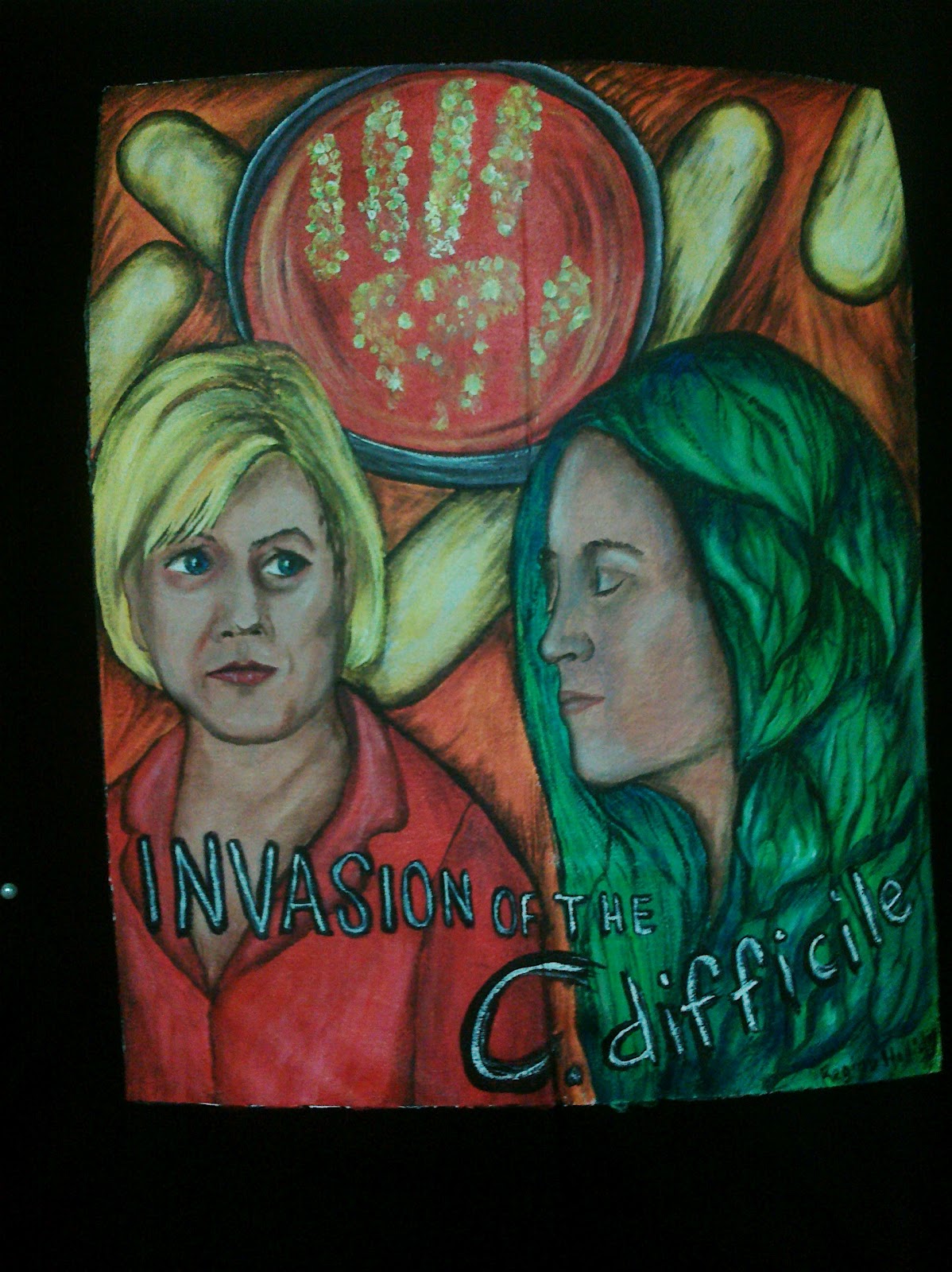
7)    Should we pursue a national project, like a “Stay Well” card for patients that includes bleach wipes (effective in killing C.diff spores)? Or encourage florists to provide flowers and bleach wipes? Should we pursue a private sector partnership to accomplish this? (though this would likely happen down the road, I’ve reached out to the Clorox Company for a conversation). Are there other potential projects?
 
A thought I’d like to add…AHRQ is pursuing a patient reporting website to be built by the Rand Corporation, where a we could report an instance of medical harm…a wonderful potential driver of quality improvement.

            I think of advocates like Helen Haskell, and the panic of feeling in real time that you’re losing someone you love, and that no one will listen. I suggest a “panic button” on a poster on the wall in each patient’s room. It would have a phone app and a toll-free number connected to this reporting database. These reports would be anonymous but you’d have to agree to submit a full report later. Maybe each hospital could choose to assign a person who’d pick up on such calls in real time. Or maybe to start, the data just accumulates to flag dangerous hospitals/units/providers and identify patterns. But it would absolutely create more patient-driven and better accountability/transparency of patient harm.
 
Next Steps: We’ll be creating a survey through Traitwise.com (Regina got them to help —yay!) to begin capturing your thoughts and get to the next level of organization. In the meantime some possible questions are below. Please feel free to respond with general thoughts in the comments field.
 
 
Possible, sample questions:
1)    Do you want to be part of a national patient advocacy group?
2)    What should this group be called? (choices a,b,c?)
3)    Please rank national actions priorities (rate 1 through 5, 1 being do not support and 5 being you support this item strongly)
Cleanliness
hand washing campaign, bleach wipe campaign, no long sleeved uniforms or lab coats, just say no to long ties in the care setting, etc

data access
Demand access to your data by USB, CD or download, etc?

dignity
Photo ID for patients/caregivers and medical providers, Medical records with visual avatars, etc?
 
transparency
Yelp for providers, resources like faircare, HCHAPS awareness and hospitalcompare.gov etc?


4)    How important is it to ensure patient participation is included in every meeting on policy or process? (scale 1-10)
5)    Should representatives be vetted by some process? By whom? (choices) By a metric? Klout Score/Google Results/Certification Process combined?
6)    Should they be paid? By whom? (choices)
7)    How much time can you devote to this cause in tandem with your own work? (choices)
8)    What specific skill or work can you (and are you willing to) offer to this group? (Tweeting, blogging, hospital board experience, training, speaking, etc).
9)    How much do funding limitations impact your capacity to offer the above?
10)  If funding weren’t an issue, what percent of your time would you be wiling/able to devote to a national patient advocacy agenda you believed in?

We love forward to hearing from you! Please post your ideas in the comment section below!

-Pat Mastors and Regina Holliday


Sunday, October 28, 2012

The Conference That Felt Like a Hug.


So was Partnership With Patients September 21-23, 2012 in Kansas City a success?

We proved it was possible for a loose confederation of patients to gather and organize with little time and little funding.  We were nimble. 

It was a great gathering of lovely people from all over the nation.  Patients worked hand in hand with partners.  Each benefited from the expertise of the other.  Most of all we proved this could be done.

Remember where this saga began?  On May 22nd , we were told there was no funding to gather patients to talk about goals of the Partnership for Patients campaign.  Pat Mastors and I thought we had to do something to change this.  Kathy Nicholls helped create a website and we began to plan.   In the months hence we worked with the team from Weber-Shandwick and the Partnership for Patients team from CMS to open up communication between an ever larger group of patients.  Representatives were able to come to our Kansas City summit from both Weber-Shandwick and CMS.

PWP wordle
Crowd-funding

HealthTech Hatch: Patient Travel Scholarships

Thank you to Patricia Salber and the entire HealthTechHatch team for their dedication to go live as soon as possible, thereby ensuring we had a chance to raise the needed funds.  Thank you to all the 34 amazing people who donated to HealthTechHatch Patient Travel Fund at the Society for Participatory Medicine.  We raised $6,085.00 in approximately 2 weeks during the first weeks of public beta. 

THANK YOU! Josh Kimberg, Pat Salber, Chris Selecky, John Sullivan, Juliet Oberding, Dov Michaeli, Marty Diamond, Amy Salber, Elaine Waples, Bryan Beck, Laurie Nirenberg, Lisa Fields, Josh Krakauer, Susan Hull, Mee Elizabeth, Scot and Mitch, Megan Grangoff, Jon Mertz, Wayne Pan, Lorrie Eigles, Peter Boland, Grey Miller, Daniel van Leeuween, Ian Eslick, Kathy Nieder, Colin Hung, Maureen Bisognano, Jim Hansen, Helen Haskell, Steven Davidson, Amanda Griffith and Jamie Inman

This allowed the Society to issue 9 scholarships of 500 for e-patients to attend the event.  As we received over the required amount and as some individuals donated directly to the Society there was money left over to seed a permanent fund for patient travel at the Society for Participatory Medicine.

Thank you to our scholarship award winners for being the first e-patient travel scholars!

Amanda Greene, Richard Anderson, Evelyn McKnight, Alicia Staley, Bart Windrum, Michael Weiss, Nikolai Kirienko, Steven Baker, Winnie Tobin

Medstartr: Travel Funding for the Walking Gallery and Partnership With Patients

Thank You to Alex Fair and the entire Medstartr team for their hard work supporting us to meet our funding goal and thank you to the 90 funders who helped us go far beyond our original funding goal.  This project was funded at 219% raising $10,948.00 and broke the record for most funders and most money raised on Medstartr at the time of the project close.

THANK YOU to our amazing funders! Alex Fair, Nick Dawson, Gregg Masters, Kim Whittemore, Alexandra Yperifanos, Abby Prestin, Howard Luks, Ileana Balcu, Donna Scott, Deidre Bonnycastle, Alan Greene, Theresa Willett, Steve Sisko, Martine Ehrenclou, Benjamin Miller, Jerry Matczak, Pat Mastors, Lisa Fields, Patricia Salber, Mary Cattolico Camp, Mindy Brown, Kavita Patel, Clay Patterson, Janice McCallum, Jess Jacobs, Anette McKinnon, Roni Zeiger, Loring Day, Linda Brady, Marilyn Mann, Heather Leslie, Jon Mertz, Kristen Andrews, Sarah Kucharski, Carolyn Thomas, Sue Woods, Fred Trotter, Matthew Holt, Chiara Bell, P. F. Anderson, Phoebe Browning, Ted Eytan, Ronan Kavanagh, Nicole Dettmar, Andrew J. Rosenthal, Brian Ahier, Matthew Browning, Andre Blackman, John Moehrke, Symplur, Sherry Reynolds, Pat Mastors, Matthew Katz, Gangadhar Sulkunte, Bruce Ramshaw, Ann Becker-Schutte, Michelle Litchman, S. Turner Dean, Lisa Fields, Julia Halisy, Andrew Spong, Peter Levin, Brian Carter, Colin Hung, Kourtney Govro, Ruth Ann Crystal, Marianne Venitti, Emily Hackel, Devon Scanlon, Helen Hadley, Mike Sevilla, Joshua Rubin, Noel Eldridge, Phydian Systems, Alexandra Drance, Susan Eller, Ross Martin, Elin Silveous, Qpid.me, Joltdude

Thank you to everyone who supported Partnership with Patients on Eventbrite.  Many of you purchased tickets at sponsorship levels, which enabled us to pay for food, staffing and shuttles.  

#Cinderblocks

Thank You! Susan Hull, Scott Strange, Francie Grace, Howard Luks, Joleen Chambers, Steven Baker, Alexandra Yperifanos, Mark Scrimshire, Maumi Cannell Chatterton, Dean Sellis, Amy Keil, Bunny Ellerin, Katrina Huckabay, Carolyn Capern, Trisha Torrey, Lisa Fields, Michael Millenson, Diane Stollenwerk, Jen McCabe, Pat Mastors, Ryan Neuhofel, Karen MacDonald, Casey Quinlan, Jerry Matczak, W. Joseph Ketcherside, Gary Takher, Jody Schoger, Gayle Sulik, Dave DeBronkart, Douglas Wager, Ken Burke, Eunita Winkey, Bridget Searles Andi Neuhofel, Marcia j. Corbett, Lesa Mitchell, Sarah Barr,  Winnie Tobin, David Voran, Roy Foster, Tiffany Peterson, Amanda Greene, Alicia Staley, Richard Anderson, Michael Weiss, Nancy Imber, Robin Miles-McLean, Karen Oliver, Linda Ketcherside, Ross Martin,  Colby Meier, Jim Hansen, Peggy Zuckerman, Evelyn McKnight, Amy Burgess, Ann Becker-Schutte, Bart Windrum, Steve Daviss, Joshua Rubin, Diana Lee, Brian Carter, Sarah Kucharski, Kait B. Roe, Olga Pierce, Erin Gilmer, Dan Ford, Erika Hanson Brown


PWP sponsors all

Thank you to our many sponsors
Cerner graciously hosted us in their educational facility as well as helped with coordination  and audio visual equipment and staff.  Cerner also gave tours of their experience theater to patient groups to better explain HIT policy in real life.  Intouch Solutions helped fund patients, promoted the event and and helped pay for food.  Pocket Health helped promote the event and paid for food during the weekend conference.  Mark Scrimshire and Maumi J Cannell Chatterton with Health Camp added one more weekend to their busy schedule and hosted our unconference day.  We owe a great deal of thanks to all the partners listed above that made this event a reality.

The Kansas City Marroitt Downtown was our conference hotel.  Even though our contingent was small, four members of the upper management of the hotel came down to thank us during The Walking Gallery.  They were honored that we chose their hotel.     

Thank You to our Bloggers and Social Media Mavens 
Many of the attendees in person or online are wonderful bloggers and here are some of their reflections on the event.  I will post other accounts as I become aware of them.

Partners: Ann Becker-Schutte who wrote about the Walking Gallery, Why Your Voice Matters and Transforming Pain Into Purpose
Joe Ketcherside: Voices Found
Mike Sevilla Partnership with patients Summit
Mark Scrimshire HCKC Recap
Bunny Ellerin Partnership With Patients: A Conference Like No Other
Gary Takher Patients Connected Like Legos
Whitney Bowman-Zatskin Regina Holliday and the Partnership with Patients

Patients:
Bart Windrum Be Ahead of All Partings
Kathi Apostolidis Partnership With Patients Goes Global
Amanda Greene Nothing is Impossible
Michael Weiss Video Summary of Partnership With Patients
Erin Gilmer Partnership With Patients
Scott Strange On Feeling Centered and the Unconference
AfternoonNapper The Ethics of Pharma-Patient Relationship 
Corinna West I met the 1000 mile swimmer and Five Things I learned at Partnership with Patients Conference
Alicia Staley Cerner Showcases the Future of Healthcare
Carolyn Capern The Partnership with Patients Summit

Quite a few people wondered at our long hashtag.  I told them to read the blog #Cinderblocks and patient Summits. We trended on twitter for the Kansas City region during the conference.  Our symplur analytics show over 3k in tweets leading to 9 million potential impressions.

We also had an unexpected guest.  On Sunday swimmer Dave Cornthwaite and his support team joined our group as he swam down the lower Missouri to raise awareness and funds for breast cancer.  Thank you to Corinna for introducing us.

Thank you to all of our speakers!

We really packed in a lot of content in very few hours thank you to all of our veteran and novice speaker that made that possible.  Cerner will post these videos in the months to come and I will link to them here.

Our Partner Speakers:
Ryan Neuhofel, Tobias Gilk, Anne Becker-Schutte, Joe Ketcherside, Josh Rubin, Doug Weinbrenner, Katherine Cartwright Knodel, Jim Hansen, Roy Foster, Olga Pierce, Michael Millenson, Lesa Mitchell,  Susan Hull, Bunny Ellerin, Brian Carter

Our Patient Speakers:

Thank you Lisa Fields, Bart Windrum, Joleen Chambers, Tiffany Peterson, Kait B. Roe, Eunita Winkey, Amanda Greene, Carolyn Capern, Jari Holland Buck, Pat Mastors, Erin Gilmer, Casey Quinlan Michael Weiss, Dave de Bronkart, Evelyn McKnight

Reflections
 “Was it a success? Was Partnership With Patients in Kansas City Sept 21-23, 2012 all that you had hoped it would be?"

How do you answer that?  Maybe the answer is an economic one, "Yes! We raised the money needed to fund it and found a venue to host us."  Perhaps answer is and organizational one, "Yes! Patients and Partners flew from all over the nation and locals gave up their weekend to attend this event in Kansas City."  Or should we answer in another way? "This event was a moment to recharge the soul and renew the will to fight for others."

Maybe success was having the event in the first place.  Maybe success is the willingness to try even if we fail.

At this event I was a moderator and an organizer.  I did not deliver a keynote speech; I left that to the many other attendees.  I did deliver some closing remarks.

I spoke to crowd about the day, July 21st, 2007, I stood upon the sales counter at the toy store Barstons Child’s Play.  It was 11:45 at night and I was cloaked in a witches robe.  I was performing a dramatic interpretation of  J.K. Rowling’s Harry Potter and the Half-Blood Prince, the sixth installment in the series.  As I performed the dialog between Professors Snape and Dumbledore, I looked into the glittering eyes of the hundred plus customers who crowded every isle of our store.  Then it was midnight, my performance ended, and the crowd grabbed the new book: Harry Potter and the Deathly Hallows.

My husband Fred and I read Harry Potter and the Deathly Hallows very rapidly, mostly reading for plot.  Years later after Fred’s death, I would read it again.  It dealt so well with immense journey one undertakes after the death of a loved one.   I suppose that is very understandable as J.K Rowling based a lot of Harry’s journey on her own experience with grief after her mother’s death in 1990.  I told those assembled that one line from the book spoke deeply to me in my grief.

"I open at the close."

I told them this line was such a powerful one.  This is the moment that Harry embraces the greatest failure life has to offer: to die.  This is the moment we go on no matter our fate; we will strive, we will try to help others even if our own success is forfeit.  In this moment we accept that we can fail, and thereby create an opportunity to vanquish our foe.  

That is the close I gave those brave partners and patients who met in Kansas City.

I open at the close; or in this end, exists a new beginning.

Wednesday, September 19, 2012

Partnership WITH Patients


The Partnership with Patients Summit Sept 21-23:
Kansas City Here we come!

The conference hashtag is #cinderblocks on twitter    


Friday 21, The Walking Gallery: 6:00pm to 8:00pm
To begin this conference The WalkingGallery gathers on Friday night Sept 21, Kansas City Marriott Downtown 200 West 12th Street, Kansas City, MO 64105 light refreshments will be served

Twitter hashtag: #TheWalkingGallery

The patient voice — in the form of the Walking Gallery of Healthcare art event —will arrive in Kansas City as walkers from throughout the nation will display the stories painted on their backs of business jackets. Internationally recognized patient rights art advocate Regina Holliday will debut her latest works. 
  
After gathering at the Marriott we will attend the Plaza Art Festival at 4750 Broadway, Kansas City, Missouri 64112 in our jackets and spread the word about patient engagement.

Shuttle to Riverport facility leaves Mariott 7:00 am


Saturday 22, Registration begins at 7:30am
Cerner will host the Summit Saturday and Sunday at their educational facility at Cerner Educational Building 6711 NE Birmingham Rd  Kansas City, MO 64117
Coffee and breakfast will be served in the exhibition area 

Saturday Morning 8:00 am in room A  (this room we will record.)

8:00 Opening Comments: Regina Holliday


Regina Holliday is an artist, speaker and author in Washington DC. She writes about the benefits of HIT and timely data access for patients and families. She painted a series of murals depicting the need for clarity and transparency in medical records. This advocacy mission was inspired by her late husband Frederick Allen Holliday II and his struggle to get appropriate care during 11 weeks of continuous hospitalization at 5 facilities. Regina paints and speaks at medical conferences throughout the world. Her work is visual reminder of the patient in the center of any policy debate and technical application. She also began an advocacy movement called “The Walking Gallery.” The Gallery consists of medical providers and advocates who wear patient story paintings on the backs of business suits. Her artwork has been in peer-reviewed journals such as the BMJ and APA journals. She recently wrote a book "The Walking Wall: 73 Cents to the Walking Gallery."  

8:30-9:10 The Society of Participatory Medicine

“e-Patient Dave” deBronkart was diagnosed in January 2007 with Stage IV, Grade 4 renal cell carcinoma (kidney cancer) at a very late stage. His median survival time at diagnosis was just 24 weeks; with tumors in both lungs, several bones, and muscle tissue, his prognosis was “grim,” as one website said.
He received great treatment at Boston’s Beth Israel Deaconess Medical Center. His last treatment was July 23, 2007, and by September it was clear he’d beaten the disease. His remaining lesions have continued to shrink.
An accomplished speaker and writer in his professional life before his illness, today Dave is
actively engaged in opening health care information directly to patients on an unprecedented level, thus creating a new dynamic in how information is delivered, accessed and used by the patient.

Michael L. Millenson, president of Health Quality Advisors LLC, Highland Park, IL, is a nationally recognized expert on quality of care improvement, patient-centered care and web-based health. He is the author of the critically acclaimed book, Demanding Medical Excellence: Doctors and Accountability in the Information Age, and holds an adjunct appointment as the Mervin Shalowitz, M.D. Visiting Scholar at Northwestern University’s Kellogg School of Management. Earlier in his career, he was a health care reporter for the Chicago Tribune, where he was nominated three times for a Pulitzer Prize. National Public Radio called Millenson “in the vanguard of the movement” to measure and improve American medicine. In addition to work in health policy and strategy, Millenson has designed and implemented an Accountability Audit for hospitals, websites to help in consumer quality-of-care decisions and a joint doctor-patient program to improve communication during office visits. As a senior adviser to the Markle Foundation, he helped launch the Connecting for Health interoperability initiative. Prior to starting his own company, Millenson was a principal in the health-care practice of a major human resources consulting firm. Before that, at the Tribune, he was one of the first journalists to write about health policy issues for the general public and was recognized with an Alicia Patterson Foundation Fellowship and other awards. Millenson has written for publications ranging from the British Medical Journal and Health Affairs to The Washington Post, Kaiser Health News and Forbes.com, and he is a contributing editor to The Health Care Blog. He is president-elect of the Society for Participatory Medicine and also serves on the boards of the American Medical Group Foundation, the AHIMA Foundation and the American Journal of Medical Quality.
series of 4x4 presentations from sponsors 9:15-9:45
Intouch Solutions Bunny Ellerin


Bunny has spent the last two decades building healthcare companies and their brands across a number of key sectors: pharma, medtech, HIT, managed care and physician services. Most recently she was CEO of Ellerin Health Media, where she helped clients shape their digital, social and mobile strategies to successfully communicate with physicians and other HCP’s. Prior to running her own company, she was Managing Director at InterbrandHealth, a leading Omnicom-owned global brand consultancy, where she led the Research & Analytics division and spearheaded the firm’s efforts in the digital arena.

Bunny has worked closely with physicians throughout her career, becoming a trusted advisor on both business and clinical initiatives. Upon graduation from graduate school, she managed 14 specialty physician IPA’s (Independent Practice Associations)  in oncology, gastroenterology, urology, cardiology and orthopedics, where she negotiated and operated risk –based contracts with leading managed care organizations. She was then recruited her to help some of these same doctors create an educational platform for the dissemination of clinical content. As Executive Vice President of Clinsights (later acquired by PPD, a leading Contract Research Organization), Bunny launched several physician education websites including TCTMD, the first online community for interventional cardiologists. This is where she first witnessed the power of the Internet in influencing physician behavior.

Bunny graduated from Columbia University with a Bachelor of Arts in Political Science. She received her Master of Business Administration from Harvard University.

Pocket Health Joe Ketcherside


Brian Carter: What is a Patient Portal?

What is a PHR?
What is an HIE?
What does Automated Blue Button and #VDTNow mean? 

HIT and Policy

Session 1
10:00-11:45 am first group of 25 patients go on shuttles to experience theatre on Cerner Campus
Session 2
12:00-1:45 pm second group of 25 patients go on shuttles to experience theatre on Cerner Campus

Patient Quality and Safety Room A

Session 1
10:00-10:45: Pat Mastors and Partnership with/for Patients


Pat Mastors is a hospital patient advocate and former medical reporter committed to a range of initiatives that effectively put patients at the center of care. Her focus is the engagement of patients and their advocates, a group some medical experts call "the most under-utilized resource in health care". 

Pat’s patient advocacy began with the sudden hospitalization of her father in 2005, when a fall down the stairs required surgery. It was an otherwise successful surgery, but complications of a common infection called Clostridium difficile caused his death six months later. As his only daughter, and having acted as his health advocate during his hospitalization, Pat found this a life-changing experience. She launched an informational website about the risk of infection in hospitals, lobbied successfully to pass two patient safety laws in her home state (Rhode Island), and now works with patient and provider groups nationwide toward a common goal of greater patient engagement for better health.

For more than 20 years Pat was a television news anchor and medical reporter at WJAR-TV and WPRI-TV in Providence.  Her effectiveness as a speaker and presenter, her passion for patient engagement, plus her genuine empathy for the concerns of both patients and providers, make her uniquely effective at moving people toward common ground.

Pat serves  as a patient/family advisor to the U.S. Department of Health and Human Services “Partnership for Patients” Hospital Engagement Networks. She is the "consumer voice" on the HAI reporting steering committee for Rhode Island's State Health Department. She works with the Consumer's Union Safe Patient Project (a branch of Consumer Reports), and is on the Advisory Board to the Small Business Development Center at Johnson, Wales University.


Session 2
11:00-11:45: Patient Speakers and SpeakerLink Panel: 

Dave DeBronkart See Above,


Tiffany Peterson is currently a lupus ePatient advocate sharing her experience on life while living with lupus at TiffanyAndLupus and is the founder/community manager of Friends Against Lupus; an informative community of lupus patients, caregivers, and supporters. 


She has been an ambassador for the S.L.E. Lupus Foundation for about two years and is currently Chair of their Awareness Committee.


Kait B Roe 

Is a fierce patient advocate for patient centered care as found in Mental Health parity and integration into physical care. She has a specialty in LGBTQQI disparity and cultural competence. Kait is known best for her constant reminders that if it is CALLED patient centered, there BETTER be a patient sitting at the table- every table – yes, that one too! She is also known for her love of bacon...


Media and the Message Room B
(Social Media/Activism/Public Speaking)

Session 1 Intouch Solutions on Media 10:00-10:45


Doug Weinbrenner has spent his entire career bridging the gap of health disparities. He spent over a decade on the front lines of patient advocacy working with local, state and national nonprofit organizations and government agencies to better support and strengthen various patient communities; including mental health, HIV/AIDS and rare genetic diseases. In response to fewer patients coming to providers for information and services, Doug lead these various providers to a digital model that responded to and even anticipated patient needs. He continues this work today as Director of Social Media for Intouch Solutions, building bridges among patient communities, disease awareness and therapies.

Session 2  
11:00-11:45 Empowering Your Message:  The Human Technologies of Speaking and Bringing Your Message Forward

Katherine Cartwright Knodel, speaker and workshop leader, writer, empowerment coach, spiritual director, and transformational training designer, works with groups to help them empower the life and mission of their organizations and with individuals to heal and empower their lives. An ordained Lutheran pastor specializing in transformational ministries, she served congregations for 22 years and continues to preach, teach and consult.  She  is an instructor for Pennsylvania Diakonia, teaching two courses, Biblical Images of the Life of the Church and Communicating the Gospel, a columnist for the Bucks County Courier Times, and maintains a coaching and healing practice in Bucks County, PA. Her forthcoming collection of poetry and short stories, Claws of Uthurunku: Healing the Feminine will be out later this year and she is working on a new book, Opening the Heart of the Church: Empowering People for Compassion and Authentic Community. She has developed and leads a number of workshops, including Anthropology for the Soul: Excavating the Stories of Your Life and Empowering Church-Empowering Leader, a transformational training design that can be adapted for any spiritual community or organization. She volunteers with the SEPA Chapter of the American Red Cross as a Specialty Volunteer in Spiritual Care.  Her poetry and education page, Awakened Spirit, exploring the landscape of poetry, myth, and the fractured-expanding-healing self, can be found on Facebook. She is certified in Transformational Training Design and Empowerment Facilitation through The Empowerment Institute Training Programs.


Lunch
11:45-12:15

HIT and Policy Room C


Session 3
2:00-2:45 Roy Foster: HIT and Meaningful Use 101


Roy Foster comes from a long line of health care consumers.   Even before he earned his Bachelors of Arts from Ottawa University he had already had several encounters with the health care system.  Roy’s family medical history includes several chronic conditions such as adult diabetes, high blood pressure, congestive heart failure and even some mental disabilities. 
Today Roy serves the industry as a passionate believer that empowered consumers and the aggressive advancement in the utilization of health information technology will result in the fundamental changes needed in order for our country and our world to reach its fullest potential. 
Roy has spent the last 11 years helping health care organizations implement electronic medical records.  The last 3 years he has served as the Executive Director of the Regulatory & Compliance Practice.  In this role he led a dynamic of team of experts on health policy and organizational strategy.  By the end of 2012, close to 90% of all health care facilities using Cerner’s EMR will be meaningful users.  Roy is continuing his mission by taking executive responsibility for Patient Centered Medical Home strategies.     

Session 4
3:00-3:45 HIT Panel

Jim Hansen :

"Consumer/Patient Experience in a Transformed
 HIT-Enabled
Health and Health Care System

Jim Hansen serves as Vice President and Executive Director of the Dossia Consortium, a not-for-profit association that brings together major employers - including AT&T, Intel & Walmart - representing over five million employees, dependents and retirees to advance the use health information technology to improve the safety, quality and efficiency of health and health care for all consumers and patients.

Mr. Hansen possesses 30 years of information technology, strategic planning, product development, marketing, operations and finance experience including 20 years within the health care industry.  His journey in consumer/patient engagement began as a member of the Health Partners (Minnesota) team that created the innovative Consumer Choice System in 1994.  Prior to joining the Dossia Consortium, he was founding President and CEO of CareEntrust, an award-winning not-for-profit employer-sponsored health information exchange (HIE) delivering secure regional health record services for use by both consumer/patients and health care providers.

Mr. Hansen is actively involved with a consumer/patient perspective in a number of national health and health care transformation supporting organizations including the Institute of Medicine (multiple groups), ONC S&I Framework Transitions of Care workgroup, and most recently DirectTrust (a group developing a trust framework for Direct).  He was previously a long time working member of the Healthcare Information Technology Standards Panel’s (HITSP) consumer workgroup.

Mr. Hansen holds BS Business Administration (Information Management emphasis) and MBA degrees from the University of Colorado. 


Joe Ketcherside:  "Where do I put my damn data? Patient Portals and PHRs"


Joe Ketcherside, MD is an experienced medical informaticist and business leader with a strong clinical and industry background. He is the co-founder of Cognovant, Inc., a consumer health informatics company specializing in mobile, personal health record technologies such as their PHR platform, PocketHealth.
He also serves as the CEO of Ketcherside Group, LLC, an independent consultant to health systems and technology companies, providing strategic insight for technology adoption and product development.
Dr. Ketcherside practiced neurosurgery for 11 years in Kansas City, MO in a community practice as well as serving as Chief of Neurosurgery at the University of Missouri - Kansas City. After further education in the Software Architecture Department at UMKC, he left clinical practice to work with Cerner Corp as an engineer, physician executive, and product management director for physician systems. He subsequently worked at TheraDoc, Inc. as Chief Medical Officer and VP for Corporate Strategies.
Dr. Ketcherside then served as Senior VP and CMIO for Methodist Healthcare in Memphis TN, where he led their EMR and CPOE initiatives. He was also the co-director of the Biomedical Informatics Unit of the University of Tennessee Health Sciences Center Clinical and Translational Science Institute, which he helped to create. Following that, he was CMIO at Heartland Health in St. Joseph MO, and the Medical Director for the Lewis and Clark Information Exchange, a regional HIE. In all of these roles, he was responsible for system design, implementation and adoption across the enterprise.


"A Patient-Centered Learning Health System: What Our Health System can Learn from Us"


Josh C. Rubin
, JD, MBA, MPH, MPP, is the the Executive Director of the Joseph H. Kanter Family Foundation and Health Legacy Partnership (KFF). Josh brings to KFF not only energy and experience, but an evidenced strong commitment to KFF's mission. In 2009, KFF contracted with Josh's then-employer eHealth Initiative (eHI – a multi-stakeholder Washington-DC based nonprofit organization whose mission is to drive improvements in healthcare quality, safety, and efficiency through information and information technology) to have Josh conduct global research on international uses of electronic health records (EHRs) for outcomes research purposes; research that served as the foundation upon which KFF's international working meeting was developed, in collaboration with The Commonwealth Fund. As Josh learned more about KFF's vision for a Learning Health System (LHS), he not only articulated his belief in KFF's mission, but volunteered hundreds of hours of his time and expertise over to serve as an advisor, to build partnerships and seek out new opportunities for KFF, to conduct research, and to refine and advance KFF’s mission -- before ultimately becoming KFF's Executive Director. Embracing Nelson Mandela's notion that "Many things seem impossible until they are done," Josh is exceptionally committed to doing whatever it takes to surmount any obstacles along the path to effectuating KFF's vision for a national-scale LHS that will advance medical research and patient safety, transform the practice of medicine, and empower clinicians and patients.


Patient Quality and Safety Room A
Session 3
12:30- 1:45 Device Safety Panel

Doctors, nurses, radiographers, medical physicists, these are the credentials you might expect find for MRI safety advocates, but architect? But that's what Tobias Gilk is, and in the past 10 years, he has become one of the industry's most influential voices on issues of safety and protections against preventable accidents.

Going from simply designing MRI suites, to collaborating with clinical and technical experts, to serving on the MRI Safety Committee for the American College of Radiology, Tobias has provided MRI safety training for the Joint Commission, contributed to MRI safety standards published by the ACR, and design standards for the VA, and the Facilities Guidelines Institute. He is an internationally invited speaker and consultant and is another example of how those committed to safety can affect meaningful change.


Joleen Chambers became her brothers' patient advocate after his 9/29/08 failed elbow implant "revision" surgery. (The elbow was originally implanted just four months earlier on 5/19/2008.) She researched and learned that FDA clears implanted medical devices through the 510(k) process that on 7/29/11 the Institute of Medicine reported is "flawed based upon its' legislative foundation".  This should not have happened to him. He should be cared for. Changes in federal public policy that she recommend: an implant registry, FDA patient/consumer voting stakeholder rights, device warranty, rescind medical device industry entitlement/pre-emption from state court.


Session 4 Dying At Peace, Dying In Peace: Engaging in a Complete End of Life Conversation
2:00-2:45

Ann Becker-Schutte, PhD is a licensed counseling psychologist practicing in the midtown area of Kansas City, MO. Her goal in therapy is to create a safe, supportive environment for her clients.

She believes that therapy provides several key benefits. The first is the opportunity to explore challenging life issues with a caring, neutral listener–someone whose only agenda is your overall health. Another benefit is the opportunity to explore difficult experiences in a safe setting. Therapy can become a “box” to hold issues that are too painful to explore in other settings. Finally, therapy provides the benefit of an objective outside perspective, which can bring new insight about life’s challenges.


Ann's practice specialties include the intersection of physical & emotional health, grief & loss, and infertility.  She firmly believe that our emotional and physical health are strongly related.  There is great research supporting this belief.  So one of her primary goals in her practice is to create a space for those who are coping with serious or chronic health issues to receive support and gain understanding of how their mind and body affect one another.


Bart Windrum served as his parents’ medical proxy throughout their end-of-life hospitalizations during January 2004 when his mother, after sudden respiratory failure, spent almost three weeks intubated in an ICU, and April-May 2005 when his father self-admitted for pacemaker eligibility testing, medically crashed, and succumbed to nosocomial urinary tract MRSA after it migrated to his bloodstream. The number, frequency, and range of systemic problems Bart’s patient-family experienced served as his impetus to examine why his parents’ demises were far from peaceful for all involved despite advance planning, open conversation, and family cohesion.

Bart describes his 2008 book, Notes from the Waiting Room: Managing a Loved One’s (End of Life) Hospitalization, as a lay person’s root cause analysis of systemic shock and harm (and he notes that patient-families are part of the system). In it he offers guidance for how to advocate when hospitalized and how, from a practical standpoint, to increase our chances of experiencing a peaceful demise—something that most of us say we want and few achieve.

Today Bart focuses primarily on assessing impediments to dying in peace with the goal of increasing the likelihood of overcoming them. His experiences and observations since 04/05 have led Bart to adopt a contrarian’s assessment of the emerging national end of life conversation. Bart’s orientation is that we’re all best served by wide-ranging, candid discussion; apportionment of responsibility; and citizen-centric dying.


3:00-3:45 Jari Holland Buck on Patient Safety


JARI HOLLAND BUCK is a business consultant, trainer and medical layperson who spent seven and a-half months in four hospitals by the side of her critically ill husband. She dealt with thousands of doctors and nurses and almost daily crises. During her husband’s six plus months on full life support, every organ in his body failed, some more than once. And ultimately, a stroke caused by a hospital-acquired infection destroyed the personality and mind of the man she married.
Her book, Hospital Stay Handbook: A Guide to Becoming a Patient Advocate for Your Loved Ones, described the lessons she learned and used in partnership with the medical community to produce a miracle, her husband’s survival. The book was recognized as the Winner in the “Health Fitness for Family” category of Parent-to-Parent Adding Wisdom Award and a Finalist in the “Health” category of Fresh Voices Book Awards. Her work following her husband’s discharge from the hospital and their ultimate divorce has been focused on helping others avoid the pain and loss both she and her now ex-husband have endured.
Jari’s advocacy work has been acknowledged by the Institute for Healthcare Improvements with a full scholarship to attend the 22nd Annual National Forum on Quality Improvement in Health Care as one of fifty patient activists. She has provide advice to the University of Toledo Patient Advocacy Certificate program and Hospital Stay Handbook is used as one of two textbooks. She also serves as an Advisory Board member for the University of Kansas Medical Center Otolaryngology Department and is currently authoring a series of six articles on patient advocacy for a Health and Human Services publication called, The Best Times. Jari contributes to www.healthy.net,www.whathappensnow.comwww.llewellyn.comwww.bizymoms.comwww.selfgrowth.comwww.disabled-word.comwww.lovinghealing.com, The Story That Must Be Told and was featured in “Ahead of the Curve: Patient Advocate,” US News and World Report, December 11, 2008. She maintains a Twitter account on patient advocacy + new medical findings twitter.com/JariHollandBuck.


Media and the Message Room B

Session 3
12:30 -1:45 W. Ryan Neuhofel, DO, MPH: "Beyond Tweets & Status Updates"


W. Ryan Neuhofel, DO, MPH, called “Dr. Neu” by his patients, is a board-certified Family Physician practicing in Lawrence, KS.  He completed medical school at Kansas City University of Medicine and Biosciences (2004-08) and residency at  University of Kansas Medical Center (2009-11).  After serving as Chief Resident of Family Medicine during his final year of residency, he started a solo “Direct Primary Care” practice in December 2011 called NeuCare Family Medicine. NeuCare’s mission is to “provide high quality, affordable primary health care directly to our community”. Dr. Neu provides a broad spectrum of primary care in a unique fashion that includes both old-fashioned and high-tech services. In between doing house calls, he uses the internet in a variety of ways to connect with his patients. For personal issues, Dr. Neu is available 24/7 to his patients and they can communicate by email, phone or webcam for many issues . NeuCare has a Facebook page that provides news about the practice, health news and tips. Dr. Neu has recently started creating original health education videos using his digital camera, iPad and desktop computer.  He envisions a future where high-tech primary care is built upon a direct cooperative relationship between patient and doctor to create a true medical home in sickness and health.


Session 4
2:00-2:45 Lisa Fields: PowerPoints that snap, Crackle & Pop


Lisa Fields, M.S. Founder of Lisa Fields & Associates, is an adult education scholar with a master’s degree in adult education. Her clients include health care organizations, small business and nonprofits, as well as Fortune 500 companies.  Her firm gathers facts, blends them with practical wisdom and a dose of creativity and then delivers presentations, PowerPoint deck, and educational sessions worth your time. Lisa is a member of The Walking Gallery of Healthcare, an art advocacy initiative of Regina Holliday.  Her passion for health care began as she served as a Mental Health Senior Practitioner, Vocational Rehabilitation Counselor and Director of Education with a Residential Drug Addiction Treatment Center.

Lisa used her passion for sending Twitter Messages, also known as Tweets, during the Patient Safety and High Performance Leadership Summit held at the National Press Club. She also participated in HealthCampDC and later joined The Walking Gallery gathering.

Lisa, also known as Practical Wisdom on twitter, is an active participant and guest moderator for several health care social media tweet chats both in the US and internationally. Sypmplur  lists her as an influencer among several tweet chats. Lisa presented her webinar: Health care tweet chats 101: Everything you need to know for the Mayo Clinic Center for social media.
Ms. Fields, along with fellow Walking Gallery member Colin Hung, will launch a health care social media tweet chat focusing on leadership within health care this October.

Lisa adores her remarkable daughter Ally, a college freshman at the University of North Carolina Asheville. 


Session 5
3:00-3:45  Michael Millenson "I Need You (Mostly), You Need Me (Sometimes): Building a Relationship with the News Media"
See Bio Above)


Reporters need stories. You have a story to tell. The beginning of a perfect relationship, right? Ahh, if only "J(ournalist)-Date" was that simple. Relationships with the news media can have as many wrinkles as any other relationships: what that cable news reporter wants and needs can be very different from what's needed by a reporter for an online trade newsletter. This session will discuss how the media work, what to expect as a source and how the old media interact with the new and how, specifically, patient stories fit into the mix. It will also be interactive, enabling attendees to learn from each others' experiences.


Final Traditional Conference Session in Room A

4:00- 5:00 Olga Pierce from Pro Publica


Olga Pierce is a recent graduate of the Stabile Investigative Journalism Seminar at Columbia University, where she won a Horton Prize for health reporting. Before Columbia, she covered health policy for United Press International in Washington where, in addition to writing stories about Medicare Part D, uninsured Americans and AIDS vaccine, she appeared as a commentator on C-SPAN and went to Camp David as a White House pool reporter. Her stories have appeared in the Chicago TribuneNew York TimesHindustan TimesLincoln Journal-Star and other newspapers. Olga is fluent in Czech and has a bachelor’s in international economics from Georgetown University.


4:30-5:00 Lesa Mitchell from Kauffam Foundation Film Trailer 


Lesa Mitchell is vice president of Innovation and Networks at the Ewing Marion Kauffman Foundation. Her responsibilities include identification of programmatic and policy levers that can accelerate innovation and support networks enabling firm growth.

Mitchell was instrumental in the founding of the Kauffman Innovation Network/iBridge Network, the Translational Medicine Conferences in the United States and Europe, and the National Academies-based University–Industry Partnership. She also is a leader in the replication of innovator-based commercialization and mentor programs across the United States.

Mitchell recently served on the board of Gazelle Growth in Denmark, and currently is chairman of the Kauffman FastTrac board. She is an advisory board member of the National Science Foundation i-Corp program and of Modern Meadow Inc. Prior to joining Kauffman, Mitchell spent twenty years of her career in global executive roles at Aventis and Quintiles, and she was an entrepreneur focused on the global management of electronic clinical trials. 

Closing the session and transition to dinner: Regina Holliday


Dinner Served 5:15-6:15

Ignite-style speeches, (20 slides 5 minutes) begin 6:30-8:00

1. Josh Rubin (Bio Above):"Sharing Saves Lives: We are the Key to the Cure"

2. Ann Becker-Schutte( Bio Above): "Holding Hope at the Intersection of Physical & Mental Health"

3. Bart Windrum (Bio Above): "Dying In Peace: New Terms (of Engagement)"

4. Susan Hull: "We are ONE:  Ignite our collective voices"

Susan is an energetic, visionary nursing executive and entrepreneur, passionate about co-creating technology-enabled innovations, transforming health and care eco-systems to dramatically improve health and wellbeing, with national and internationally reach. Susan believes we can achieve an affordable, sustainable learning health system – where consumers, providers and communities are dynamically engaged and thriving. 

Susan is a national thought leader in redesigning healthcare in organizations and communities and brings experience from diverse roles, including designing and managing a new Children’s Hospital Emergency Service, nursing and health system executive, new healthy community partnership and community health information network (CHIN) executive, clinical informatics and decision support executive, consultant and action researcher.

6. Michael Weiss: “Using the Grassroots Patient Movement of Health Care Social Media to Manage Chronic Illness" @HospitalPatient


Michael A. Weiss is a 49-year old Patient Advocate, Health Care Commentator, Health Care Reporter, Blogger, Motivational Speaker and Video Journalist who focuses on matters pertaining to coping with chronic illness, almost exclusively from “The Patient Perspective.” He is also an Author, Attorney and MBA.
Michael was diagnosed with the auto-immune and incurable illness “Crohn’s Disease” in 1984. In July, 2001, after more than 100 Hospitalizations & well on his way to 20 + surgeries, Weiss wrote the critically-acclaimed Book, “Confessions of a Professional Hospital Patient,” determined to both CHANGE the unpleasant stigma associated with diseases like Crohn’s, Ulcerative Colitis and Inflammatory Bowel Disease and to HELP people with ALL chronic illnesses learn how to Cope, Live, Love & Laugh with their lot in Life. 
Now, in 2012, after more than 200 Hospitalizations and 20 surgeries, Michael utilizes the technology-driven grass roots movement of “Health Care Social Media” to demonstrate how Patients can share their information and experiences so that those with chronic illness from all over the world can learn and become empowered from one another without having to undergo unnecessary and depressing healthcare experiences or inefficient real life interactions with dedicated and compassionate Medical Professionals.
Weiss’ refreshingly candid and humorous accounts of his own medical trials & tribulations help others feel as if they are not so alone in their once thought of private battles caused by chronic illness such as physical, mental and emotional pain, family issues, maintaining  friendships, medical bills, and the constant associated financial pressures. It is Weiss’ hope that he and his similarly-minded Patient brethren or fellow “Crohnies” can make “Health Care Social Media” an incredibly powerful Patient Tool and true “Game-Changer” thus giving Patients a genuine Voice in all future HealthCare Reform discussions. 


7.  Carolyn Capern: (Social)Media Matters 


Carolyn is a Star-Spangled Canadian, with roots on both sides of the border that inform her perspective on politics and especially health care. The bulk of her adventures in health care began when she was in sixth grade, and began to suffer severe knee pain-a battle that continued through until college-and regrettably, it seems that health does not improve with age. Shortly after arriving for her first year of university in Washington, DC, she suffered a severe concussion that was misdiagnosed and poorly treated for several weeks, causing me to lose my memories of a three month period of time.


In 2009, she witnessed the best and worst of the American health care system. In the shadow of the Congressional debate over health care reform, she dealt with a knee realignment surgery and a sinus procedure, while watching from afar as her favorite professor suffered through cancer treatment. Both her problems were resolved with time and good care, while her professor ultimately died after being denied the same kind of quality treatment she received while in hospital. His death, which occurred on Carolyn's twentieth birthday, gave life to her commitment to fight for equal access to quality care. In his honor, She is proud to wear a jacket for The Walking Gallery called "Media Matters," depicting the importance of television and film in sharing stories of health care. 


8.  Amanda Greene: "Ignite!  From flare to flair: a journey to discovering LA Lupus Lady and "Lupus Style" @LAlupusLady.  


Amanda Greene enjoys connecting and sharing her passions with others.  Amanda is an advocate for Lupus, an autoimmune disease which afflicts more than 1.5 million people in the United States.  As "LA Lupus Lady", she raises awareness and support for Lupus and the Lupus community.  She creates YouTube videos, moderates the Facebook group "Lupus Awareness is Fun.", she openly shares her Lupus story and can often be found on her IPad "tweeting too much."She was diagnosed with Lupus in 1983, at the age of 15.  Today, Amanda not only "lives with Lupus" but is active, healthy and thrives.  Thriving with Lupus is not as easy as it sounds.  Amanda is constantly exploring new resources to manage her symptoms.  Connecting with Lupus patients, caregivers and others who live with chronic illness is one way that Amanda shares and engages with the wellness community.

As a voice and activist for Lupus and the Lupus community, Amanda believes that sharing caring.  In 2011, she moderated the "Lupus Ladies of Twitter" panel and spoke about how she is sharing that "Lupus Awareness is Fun because is it important." at the 140 Conference in New York City.  This past June, with Tiffany Peterson, she shared the impact Social Media has on the Lupus community.  Amanda described what "Lupus Style" means to her during the "#LupusChat #LupusStyle at the #140conf" panel at the 92nd Street Y in New York City.  In 2011, Amanda was a part of the "breakout sessions" at the Women in Pain Conference and spoke again this year on how Social Media can help you "Build Communities and Find your Tribe" online.

Amanda has a flair for style as an accomplished brand ambassador, wth particular experience in the fashion, entertainment and cosmetics industries.  She organized publicity events, both real-time and online, for nationally distributed brands and campaigns.  Amanda has developed successful campaigns and events for diverse clients including: CNN, Warner Brothers Television, the Mill Valley Film Festival, Bill Graham Productions and Grateful Dead Productions.  Connecting with Social Media is a natural extension of Amanda's warm personality.

Amanda lives in Los Angeles, with her husband Steve and their cat, “Rex Ryan”.  Her other interests include fashion, style, gardening and supporting the New York Jets!

9.  Erin Gilmer: "Breaking Boundaries"


Erin Gilmer is a patient advocate and health policy attorney specializing in HIPAA and HITECH in Austin, Texas.  She received her law degree from the University of Colorado Law School and was admitted to the State Bar of Texas in 2008.  She spent her last year of studies at the prestigious University of Houston Health Law and Policy Institute.  Ms. Gilmer graduated suma cum laude from the University of Colorado in 2005 with degrees in psychology and economics with an international emphasis and a minor in political science.  She has contributed to several publications including Health Law and Bioethics: Cases in Context and articles in the Journal of Experimental Psychology, Virginia Journal of Social Policy and Law, Journal of Medicine and Ethics, and the Texas Bar Journal.  Ms. Gilmer worked for the State of Texas, involved in the 2009 and 2011 legislative sessions focusing on public health.  She previously worked for several non-profit organizations including Disability Rights Texas, Texas Legal Services Center, and Rocky Mountain Children’s Law Center. Ms. Gilmer volunteers for several community organizations including Lisa’s Hope Chest, Austin Involved, and the Austin Young Lawyers Association.  Additionally, Ms. Gilmer founded Health 2.0 Austin, bringing together the Central Texas Community in health, technology, and disruptive innovation.

Erin blogs at www.healthasahumanright.comwww.austinhealth20.com and tweets @GilmerHealthLaw.


10. Casey Quinlan "How Asking What Things Cost Can Shift the System"
"Whoopee – cancer!"

That's not your average reaction to a cancer diagnosis, and Casey Quinlan isn't your average patient. When, after her 15th mammogram, she won the booby prize – breast cancer – her first reaction, after downing a stiff drink, was to cover her own cancer story with the same relentless inquiry she brought to her career in network television news, and that informs her work as a "business storyteller" and branding consultant.  Casey's approach to her treatment: be an active participant, not a passive consumer. Her metaphor for managing medical treatment? "It's like a car wash. When you go to a car wash, do you want to be inside the car, or strapped to the hood? Ask questions, make sure you understand the answers – you get to stay inside the car. Otherwise, you get lots of soap and wax up your nose!"

In Cancer for Christmas: Making the Most of a Daunting Gift, Casey shares the questions she asked her doctors, what she did with the answers, and how she navigated surgery, chemo, and radiation treatment with determination, ferocity, and a large dose of humor.  Fierce and funny, thought-provoking and inspiring, Casey's story of her journey to cancer-free is full of insight into how to survive, and thrive, after getting life-changing medical news.  Casey is a storyteller, speaker, media strategist, and writer with an extensive background in broadcasting, theater, and stand-up comedy, who believes that it – business, and life – is all about the story.

Telling a great story attracts and engages your target market, driving the growth of your brand.
Casey studied theater and performance at the University of San Francisco, American Conservatory Theater, HB Studios, and the American Comedy Institute.  From there, she launched a two-decade career in broadcast news and sports, covering stories for Dateline and Today, presidential campaigns, wars, presidential campaigns that turned into wars, NFL Playoff games, Stanley Cup hockey, and the NBA.  The highest and best use of her theater and improv training came when Casey talked her way out of police custody in Saudi Arabia during Operation Desert Shield in 1991. She talked her way out of jail, and then got to stay in Saudi for four months – she's still not sure that was really a win, but it's a great story.  She honed in-the-moment skills doing stand-up comedy, performing at Caroline's, Gotham Comedy Club, Catch A Rising Star, and the New York Comedy Club. After facing drunken hecklers, corporate audiences are a walk in the park.

It's all about the story – whether you're building a company, a brand, or a community. 

11. Jari Holland Buck (Bio See Above): "Hospital Infections - Prevention is the Key!"

12. Pat Mastors (Bio See Above) : "The Patient Pod: Putting Engagement Tools in Patients' Hands"

13. Lisa Fields (Bio Above): "Do you see what I see?"

14. Eunita Winkey "No More Clip Boards: The Behind the Scenes Struggle for the Medical Record"

Eunita Winkey is Founder/CEO of ATWINDS Foundation, Inc., and motto is "A Teacher's Work Is Never Done Services." She has appeared as a panelist for the Hysterectomy Education Resource Service Conference. In addition, she has participated in a number of health care forums, and conferences. Eunita has shared her movement with Congressman Steny Hoyer and Congresswoman Dona Edwards office. She has shared her unnecessary hysterectomy medical error story in many venues such as Radio One, Michael Baisden, 50+ Magazine, public schools, colleges, Health and Human Services Faith Expo, Congressional Black Caucus Foundation, churches, community, government, AARP and National Council of Negro Women Planning for Long-Term Care Campaign, and the Point TV show on DC cable as co-producer of the health care show. Eunita advocates the Walking Gallery for Regina Holiday and she is featured in Surfing the Healthcare Tsunami participating in the Walking Gallery (http://www.safetyleaders.org/Discovery/surfingTsunami.jsp). Eunita also advocates for electronic medical records (no more clipboards), elderly neglect and abuse, and medical ethics. As a doctoral student pursing her Doctorate in Education Leadership, she believes that research is vital to all issues,solutions,and effective leadership. For her dedication to the cause the Senator Thomas V. Mike Miller, Jr. (President)and the Senate Members of Maryland presented ATWINDS Foundation, Inc. and David Bynum (Eunita's deceased father who died of medical errors) with a Maryland Resolution. The resolution states "Be it hereby known to all that the Senate of Maryland offers its sincerest congratulations to Eunita Harper Winkey, Founder/President ATWINDS Foundation Inc. in recognition of your dedication to helping others, mentoring children strengthening communities and serving many through such programs as the Katrina Project and the Medical Record Awareness program. The entire membership extends best wishes on this memorable occasion and directs this resolution be presented on this 30th day of June 2011."


Shuttle back to Marriott 8:15pm

Shuttle to Riverport leaves Marriott 7:00am   
Sunday Registration begins at 7:30 am 
Breakfast in exhibition space

HealthCamp, an unconference will be held on Sept 23rd in Kansas City as part of the Partnership with Patients summit. Mark your calendars for the weekend of September 21st -23rd. HealthCamp hosted by Mark Scrimshire will cap off an exciting weekend at Cerner’s educational facility in Kansas City. Continuing the innovation learning approach from the previous days, patients, physicians, nurses, technologists, health system and policy leaders, payers and suppliers will create session topics the day of the event focused on "Empowering Patient Engagement." The unconference process and the Center for Total Health itself will create a flexible and energetic collaborative environment for participants. Check out the HealthCamp Foundation home page for other HealthCamp information. 


Greeting: 8:00 in room A
Break into unconference sessions 9:00 am/patient speaker boot-camp
Session rooms B,C,D,E,F,

Patient Speaker Boot camp stays in room A to record speeches
9:00 am to 12:00

Grid times for Unconference
9:00am -9:45
10:00-10:45
11:00- 11:45
12:00- 12:45 Lunch and good byes to early departures Exhibition space
1:00pm - 1:45
2:00-2:45 Wrap up in Room A
     

For more information about the summit and to receive media access with press credentials, contact @ReginaHolliday on twitter or 202-441-9664

About Partnership With Patients
This conference is two-fold in its mission. We will be working on strategies for a grass roots support the Partnership for Patients campaign. We will also help enable patients by providing a place to network, learn and grow as patient advocates that focus on health policy. You can read more about this on our website